A chimney takes more punishment than almost any other part of your home. It's exposed to rain, snow, freeze-thaw cycles, and constant heat from the flue — and the mortar joints holding the bricks together are usually the first thing to fail. Catching the warning signs early can mean the difference between a straightforward repointing job and a full chimney rebuild.
1. Crumbling or Missing Mortar
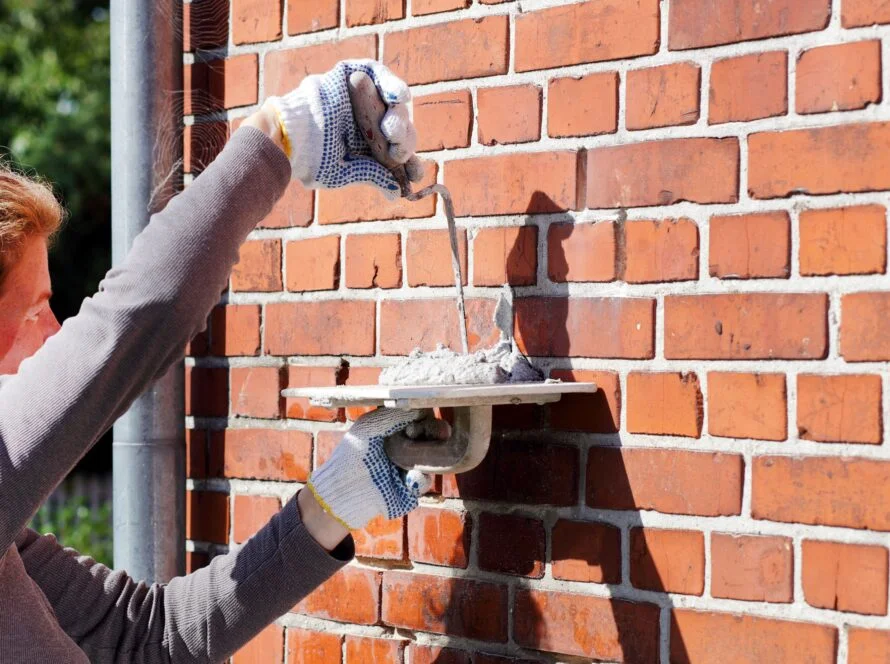
If you can scrape mortar out of the joints with your fingernail, or you're finding sandy debris at the base of the chimney, the mortar has already broken down. This is the clearest sign that repointing — removing the damaged mortar and replacing it with fresh material — is overdue.
2. White, Chalky Staining (Efflorescence)
That white, powdery residue on brick is efflorescence — mineral salts left behind as water moves through masonry and evaporates. It's a direct sign that water is penetrating the chimney, and if mortar joints are the entry point, repointing is usually the fix.
3. Loose or Shifting Bricks
Mortar isn't just for looks — it's structural. Once it deteriorates enough, bricks can shift, tilt, or come loose entirely. A chimney with visibly leaning or displaced bricks needs an inspection right away, not just for repair cost but for safety.
4. Water Stains on Ceilings Near the Chimney
Interior water stains around a chimney chase almost always trace back to failed mortar joints, damaged flashing, or a cracked crown — all issues our team checks together, since repointing alone won't solve a flashing leak.
5. Deteriorating Joints You Can See From the Ground
Grab a pair of binoculars and look at the joint lines. Deep gaps, dark shadow lines, or joints that look noticeably recessed compared to the brick face all point to erosion that's been building for years.
Why Timing Matters on Long Island
Water that gets into a damaged mortar joint and then freezes expands, cracking the brick and mortar further — a cycle masons call freeze-thaw damage. On Long Island, where winters bring repeated freeze-thaw swings, a small repointing job left until spring can turn into brick replacement by the time the weather warms up.
- Fall is the ideal window — mortar needs time to cure before hard freezes
- Water in cracked joints expands when it freezes, widening the damage
- Small repointing jobs are far less expensive than brick or crown replacement
Chimney repointing is one of those jobs that's easy to put off — until a small mortar problem becomes a structural one. TJ Construction has handled brick and masonry repair across Brooklyn, Queens, Manhattan, Long Island, Staten Island, and the Bronx for over 25 years. If your chimney is showing any of these signs, we'll assess it and give you a straight answer on what it needs.